Skip to content
Saibatu MansarayPA-C, MIS, FAPH
← Advisory Expertise

Advisory Pathway B

Trauma Systems & Executive Medical Readiness

Independent counsel to executives and boards on organizational medical risk, preparedness governance and the decisions leaders face before and during a crisis.

45+

countries covered by medical contingency & evacuation plans

60+

hospitals assessed for trauma readiness worldwide

Team leadership

multidisciplinary healthcare providers in the White House Medical Unit

6,000

person mass-casualty plan authored and adopted

What leadership gains

  1. 01

    Define the organization’s medical and operational risk in terms leadership can act on

  2. 02

    Establish clear ownership and oversight of preparedness

  3. 03

    Clarify executive decisions and authorities before a crisis

  4. 04

    Prioritize readiness investments against realistic scenarios

Medical Readiness as an Executive Leadership Responsibility

Effective medical preparedness requires more than clinical capability. It depends on leadership decisions, institutional accountability, operational planning, and the ability to anticipate and manage medical risks before they become crises.

Strategic Advisory Focus

  1. 01

    Organizational Risk & Medical Preparedness

    Assessing medical readiness vulnerabilities, operational risks, and the potential consequences of gaps in preparedness for institutional continuity and personnel safety.

  2. 02

    Readiness Governance & Accountability

    Advising on leadership responsibilities, oversight structures, and institutional processes that support effective medical preparedness.

  3. 03

    Executive Decision Support & Crisis Readiness

    Helping institutional leaders evaluate preparedness priorities, strengthen contingency planning, and make informed decisions before and during complex medical emergencies.

Approach to Engagement

Advisory engagements focus on strategic assessment, preparedness governance, and executive decision support, informed by clinical expertise and experience in complex operational environments.

Executive positioning

Saibatu Mansaray brings extensive military medical and executive operational experience to advising organizations on trauma systems, emergency preparedness, and medical readiness. Her background encompasses clinical capability assessments, medical contingency planning, and healthcare operations in complex domestic and international environments.

Drawing on her experience as a U.S. Army Physician Assistant and service within the White House Medical Unit, she offers a practical perspective on evaluating medical capabilities, identifying operational vulnerabilities, and strengthening organizational preparedness.

Her advisory approach integrates clinical expertise, operational judgment, and an understanding of the demands placed on healthcare systems in high-stakes environments.

For leaders of health systems, EMS agencies, protective and security organizations, and major events who must decide how much medical risk to accept — and how readiness is governed.
Areas of Advisory Expertise

  • Hospital & trauma-center capability assessments
  • Executive medical contingency planning
  • Operational medical risk
  • EMS & prehospital response integration
  • Emergency preparedness & trauma systems
  • Medical evacuation strategy
  • Mass-casualty planning
  • Tactical & operational medicine
  • Complex and austere medical operations
  • Clinical team leadership & readiness training
  • Interagency emergency coordination

Selected career experience

October 2017 – July 2019

Director of Advance

Office of the Vice President, The White House

  • Directed advance operations for more than 200 domestic and international executive engagements, leading interagency coordination, operational planning, and risk mitigation.

May 2015 – June 2017

Military Aide to the Vice President of the United States

Office of the Vice President · The White House

2014 – 2015

Director of Medical Advance & Operations Officer

White House Medical Unit

  • First Army female Physician Assistant appointed to the role; directed a multidisciplinary team of healthcare providers supporting the President, Vice President, and First and Second Families.
  • Developed medical contingency and trauma evacuation plans across 45+ countries, with on-site capability assessments of host-nation hospitals, trauma centers and EMS.
  • Standardized hospital and EMS vetting protocols and aligned executive medical policy with the Secret Service, State and Defense.

2011 – 2014

Senior Physician Assistant / Tactical Medical Officer

White House Medical Unit

  • First female Army Physician Assistant selected to the White House Medical Unit. Provided executive and tactical medical support, integrating clinical readiness, contingency planning, and operational medical expertise.
  • Authored the unit’s inaugural Tactical Medical Officer training curriculum and contingency medical policy manual.
  • Evaluated trauma readiness and evacuation pathways at 60+ hospitals worldwide, integrating local EMS and trauma teams into contingency plans.

2005 – 2011

Battalion Senior Physician Assistant & Lead Trauma Specialist

U.S. Army · Iraq deployments

  • Directed a 50-person medical team delivering Role II trauma resuscitation and surgical stabilization during a 10-month deployment.
  • Authored a 6,000-person mass-casualty trauma policy and surge plan adopted across four battalions; led response to a live mass-casualty event.
  • Treated approximately 7,500 casualties and coordinated aeromedical evacuations; trained 450 soldiers in point-of-injury care.
  • Participated in more than 30 joint humanitarian medical missions with the Iraqi Ministry of Health, supporting healthcare delivery and medical collaboration in Iraq.
  • Awarded two Bronze Star Medals and the Combat Medical Badge.

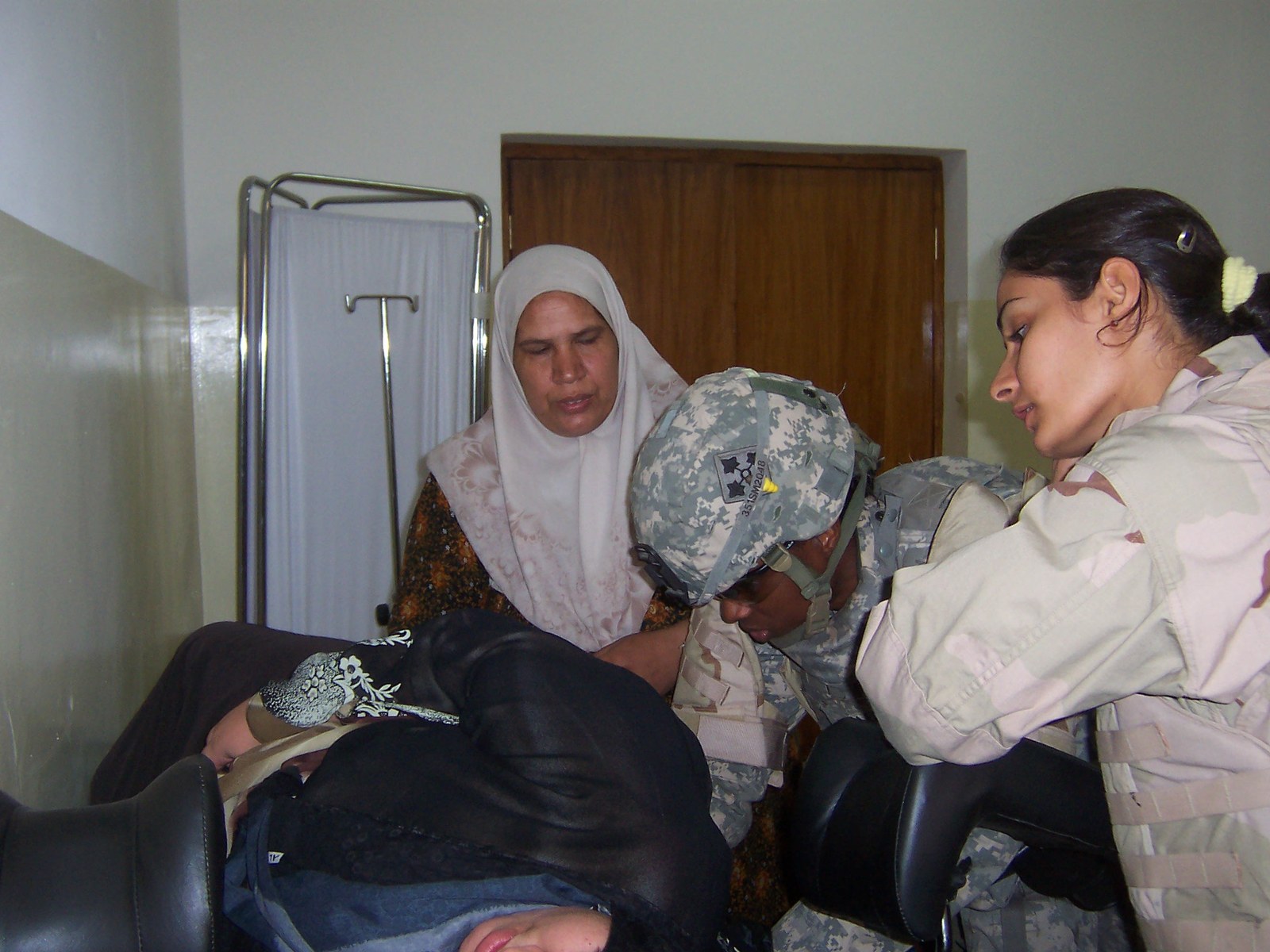
Military Medical Service | Iraq

Saibatu Mansaray providing clinical care during a humanitarian mission while serving as a U.S. Army Physician Assistant in Iraq.

Saibatu Mansaray providing clinical care during a humanitarian mission while serving as a U.S. Army Physician Assistant in Iraq
Military Medical Service | Iraq

Selected Institutional Engagement

Ihsan Foundation West Africa

Applying Trauma and Executive Medical Expertise to Hospital Design

Drawing on her experience in combat trauma care, White House medical operations, and hospital capability assessments, Mansaray provided advisory input on trauma patient flow and executive medicine capabilities for Ihsan Foundation West Africa's hospital development project.

Strategic challenges

Questions organizations bring to this work

  • How prepared is our organization to protect personnel, sustain operational continuity, and respond effectively during a complex medical emergency or crisis?
  • Are our medical readiness governance structures, oversight responsibilities, and executive decision-making authorities clearly established before a crisis occurs?
  • How effectively are our clinical capabilities, trauma systems, and emergency medical response arrangements integrated across complex operational environments?
  • What medical readiness vulnerabilities and capability gaps should leadership address before major deployments, high-profile events, or operations in complex environments?

Professional Credentials & Specialized Training

  • Physician Assistant-Certified (PA-C), NCCPA
  • Trauma Management (Ryder Trauma Center); Tactical Combat Casualty Care (TCCC); Operational Emergency Medical Skills
  • Medical Management of Chemical & Biological Casualties; Medical Effects of Ionizing Radiation
  • U.S. Army Command and General Staff College; Pathfinder, Advanced Airborne and Airborne Schools
  • Bronze Star Medal (2), Defense Meritorious Service Medal (2), Combat Medical Badge, United States Army Pathfinder, United States Army Jumpmaster

Independent counsel

Engagements are scoped individually around the institutional question at hand.

Discuss an Advisory Opportunity

Pathway A

Global Health & International Development

→